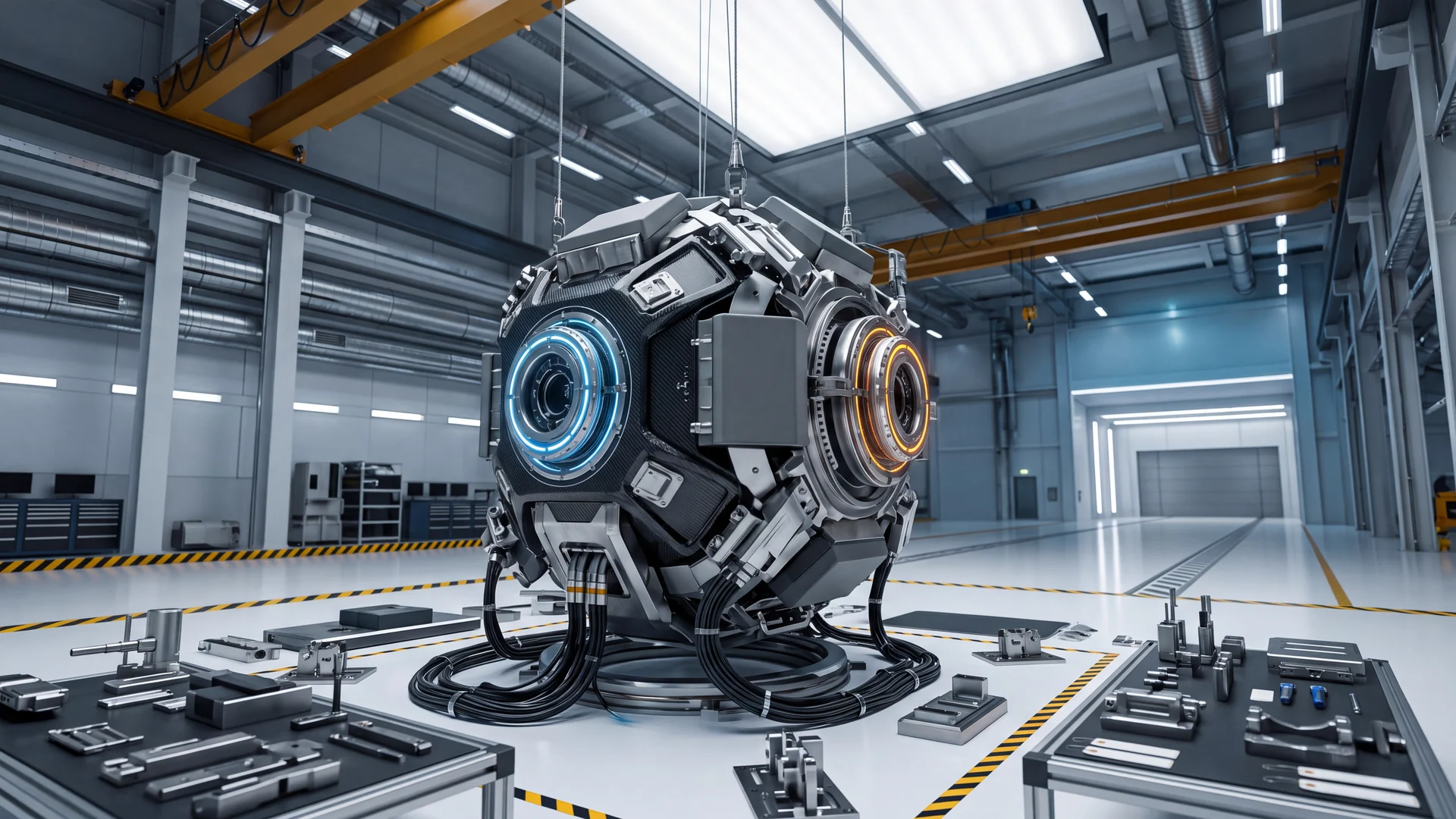
Building scalable AI infrastructure in the cloud demands a fundamental shift from traditional application design. Standard storage architectures built for batch processing fail to meet the speed and scale required by modern machine learning systems.
Engineering teams must design infrastructure that handles compute scaling ranging from 10x to 100x across lifecycle phases, far exceeding the 2x to 5x range typical of conventional enterprise systems.
In short
- •
AI workloads require specialized hardware such as GPUs and TPUs to manage massive parallel processing demands without crashing standard infrastructure.
- •
Resource scaling requirements hit 10x to 100x across model training and inference phases, breaking traditional batch-processing storage patterns.
- •
Balancing performance requirements with strict cost optimization is essential to keep high-performance AI infrastructure sustainable.
- •
Data quality remains the single most critical factor determining actual model performance and operational efficiency.
Compute Demands and Hardware Constraints
AI workloads consume computational resources at levels that dwarf conventional web applications. Fine-tuning even smaller models can easily overwhelm standard infrastructure nodes.
Architects must provision specialized hardware clusters that support high-performance parallel processing. Without dedicated GPU or TPU allocation, training pipelines experience severe latency spikes.
Storage Bottlenecks in AI Pipelines
Traditional storage tiers designed for standard relational databases or simple file shares cannot sustain high-throughput data ingestion during intensive training phases.
Engineers need to evaluate cloud-native storage solutions that decouple compute from storage while maintaining low-latency read operations for distributed model nodes.
Balancing Cost and Performance
Running continuous cloud infrastructure for heavy AI workloads quickly inflates operational budgets if autoscaling policies are misconfigured.
Architects must implement rigorous monitoring and automated resource scaling to ensure performance remains high while keeping unnecessary compute idle time under control.
Successful AI infrastructure depends on anticipating extreme resource scaling and designing storage for high-throughput demands from day one.