
Prototyping a single, monolithic AI agent is straightforward, but production environments quickly expose its limitations. As complexity grows, intermediate state fills the context window and reasoning quality degrades.
A monolithic agent attempting to handle retrieval, coding, and audit tasks simultaneously creates a bottleneck. Sequential execution forces total latency to equal the sum of every step, where a single model failure halts the entire workflow.
In short
- •
Replace monolithic agents with multi-agent systems where each agent is single-responsibility, tool-equipped, and state-isolated.
- •
Prioritize topology over model choice; matching the orchestration pattern to the specific task yields higher performance gains than switching LLMs.
- •
Use independent agents that communicate through defined protocols to ensure individual components remain replaceable and testable.
- •
Avoid sequential bottlenecks by implementing parallel research and dispatch patterns to reduce total system latency.
The Case for Decomposition
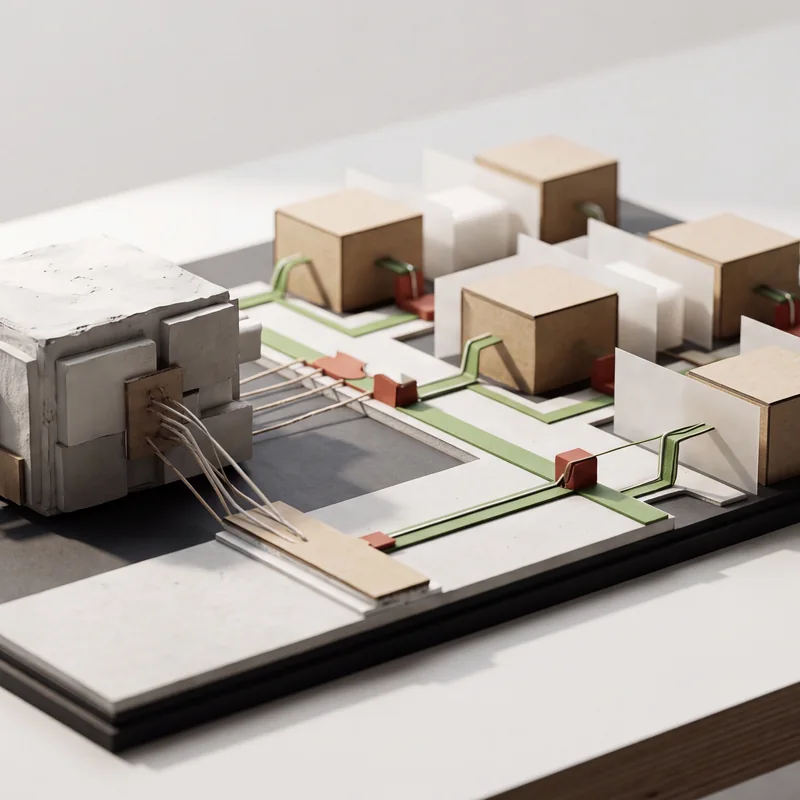
Effective multi-agent architecture relies on decomposing tasks into specialized units. Instead of one agent performing all operations, a retriever-analyzer-writer pipeline allows for targeted optimization. This approach enables true concurrency, where dispatchers can trigger multiple research tasks simultaneously before merging results.
Architects should treat agents as independently replaceable modules. By standardizing communication protocols, teams can swap out specific agents without refactoring the entire system. This modularity is essential for maintaining long-running state and implementing human-in-the-loop gateways in regulated environments.
Orchestration Patterns for Production
Production systems benefit from specific orchestration patterns, such as intent routers that direct traffic to either a fast-path keyword search or a complex LLM-based report. For more involved workflows, a supervisor pattern can manage parallel research pipelines while enforcing quality gates.
When designing these systems, avoid the trap of over-engineering early. Start with role-based pipelines for prototypes, then transition to more complex topologies as the system requirements stabilize. Standardizing on protocols like the Agentic AI Foundation's delegation standards ensures that tools and databases remain accessible across the entire agent ecosystem.
Focusing on how agents are composed is more critical for production success than the underlying model. By adopting these patterns, engineering teams can build systems that are not only more performant but also easier to debug and scale.
Source
Multi-Agent AI Architecture in Practice: Design Patterns, Frameworks & Production Guide (2026)
https://kvmnode.com/en/blog/2026-0622-multi-agent-ai-architecture-production-guide.html